Mineral Wool Production: Delivering Superior Insulation for Modern Construction
Mineral wool, commonly referred to as rockwool or stone wool, represents one of the most advanced and sustainable insulation materials available today. Produced primarily from natural volcanic rock such as basalt, combined with recycled industrial slag, mineral wool transforms abundant geological resources into high-performance products that excel in thermal efficiency, fire safety, acoustic control, and long-term durability. Unlike many organic or synthetic insulations, mineral wool withstands extreme conditions while contributing to energy conservation and healthier built environments. Its production process not only recycles significant amounts of waste but also yields a material that pays environmental dividends throughout a building’s lifecycle.
The growing emphasis on green building standards, energy codes, and occupant well-being has spotlighted mineral wool’s advantages. Manufacturers invest in efficient production techniques to maximize these benefits while minimizing impacts. From raw material melting and fiber spinning to final product formation, each stage is optimized for performance and sustainability.
Exceptional Thermal Performance and Energy Efficiency
One of the primary benefits stemming from mineral wool production is its superior thermal insulation capabilities. The fibrous structure, created through high-speed spinning of molten rock, traps millions of tiny air pockets that effectively resist heat flow. Mineral wool typically achieves an R-value of approximately R-4 to R-5 per inch, outperforming traditional fiberglass batts by 22–37%. In a standard 2×4 wall cavity, this translates to R-17.5 or higher, while thicker applications in 6-inch cavities can deliver R-27.5 or more. Continuous exterior insulation with mineral wool maintains comparable performance to foam boards while preserving its insulating qualities even under varying conditions.
Crucially, moisture and air infiltration do not significantly degrade mineral wool’s thermal resistance, unlike some other materials that lose effectiveness when damp. This stability ensures buildings retain high energy efficiency year-round, reducing heating and cooling demands.
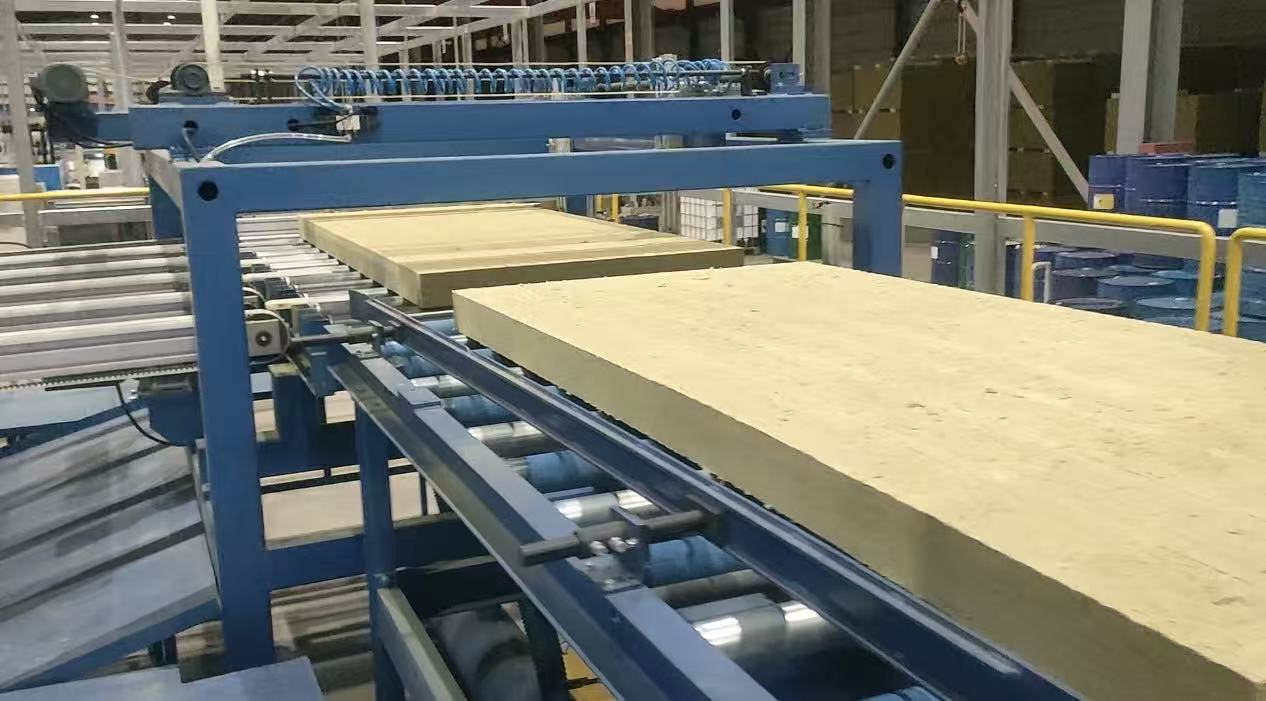
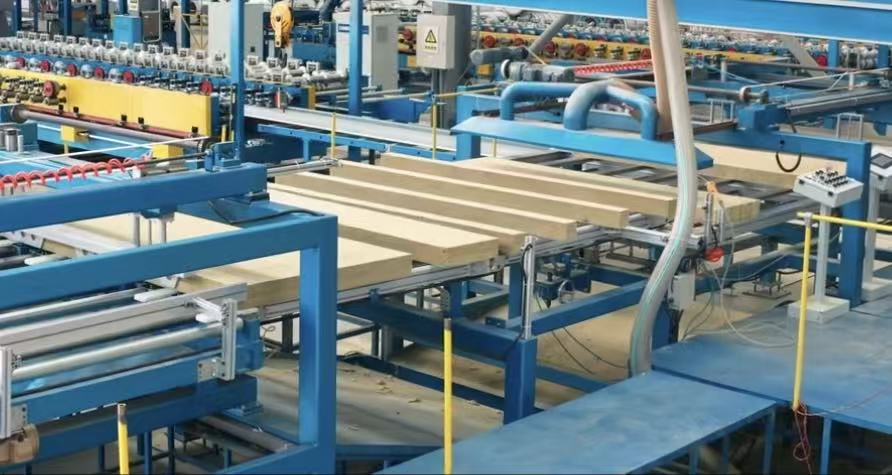
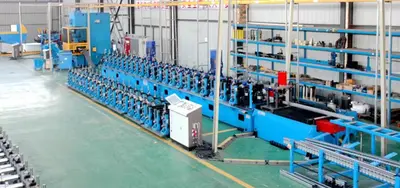
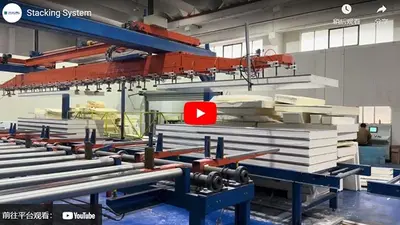
Jinggong’s continuous sandwich panel production line amplifies these thermal benefits by creating composite elements where the rockwool core is bonded uniformly between durable metal facings. The automated process of the mineral wool production line ensures consistent density and thickness, eliminating gaps that could compromise insulation performance in field-assembled systems. Panels produced on this line are ideal for rapid construction of energy-efficient warehouses, cold storage facilities, and commercial buildings, where thermal bridging must be minimized for optimal performance.
Unmatched Fire Resistance and Safety
Because the material originates from inorganic rock melted at temperatures exceeding 1,500°C, the resulting fibers are inherently non-combustible. Stone wool can withstand temperatures over 1,000°C without melting or releasing toxic fumes, far surpassing glass wool (which melts around 600°C). In fire scenarios, mineral wool acts as a protective barrier, slowing heat transfer and preventing flame spread through wall cavities or structural assemblies. It achieves the highest Euroclass A1 fire classification and can protect building structures for up to four hours in certain configurations.
Unlike foam or wood-based insulations that may contribute fuel to a fire or require added chemical retardants, mineral wool needs no such additives, avoiding potential health concerns from off-gassing. This natural fire resistance makes it especially valuable in high-rise buildings, industrial facilities, and areas with strict fire codes. Production techniques allow customization for enhanced fire performance, tailoring the fiber matrix and density to specific safety requirements without compromising other attributes.
Superior Acoustic Control and Comfort
Mineral wool’s dense, intertwined fiber structure provides outstanding sound absorption and transmission reduction, delivering significant acoustic benefits. Two-inch-thick panels can achieve Sound Transmission Class (STC) ratings of 45–52 and Noise Reduction Coefficient (NRC) values from 0.95 to 1.09, effectively blocking and deadening sound. This makes it a preferred choice for recording studios, multi-family housing, offices, and schools where noise control enhances occupant comfort and productivity. Compared to less dense fiberglass sound batts, mineral wool offers markedly better performance due to its higher mass and stiffness.
External applications further reduce noise intrusion; external insulation systems with mineral wool can lower sound levels by up to 10 dB, which the human ear perceives as cutting noise in half. The production process allows for tailored densities and thicknesses optimized for acoustic needs, whether for interior partitions or exterior envelopes. These benefits contribute to improved indoor environmental quality, supporting well-being in both residential and commercial settings.
Moisture Management, Durability, and Dimensional Stability
Mineral wool excels in moisture management without sacrificing performance. It is hydrophobic yet vapor-permeable, allowing trapped moisture to escape while resisting water absorption that could lead to degradation. The material provides no nutritional value for mold, mildew, fungi, or insects like termites, promoting healthier indoor air and longer building lifespans. Unlike fiberglass, which can sag or settle over time, mineral wool maintains its shape and density, preventing gaps that reduce insulation effectiveness. Its stiffness also facilitates precise cutting and snug fitting during installation, reducing air leaks and thermal bridging.
Durability extends to long-term performance: mineral wool retains up to 90% of its insulating value throughout a building’s life. Production innovations, including binder formulations and fiber orientation controls, enhance water repellency and structural resilience. In sandwich panel applications, Jinggong’s production line incorporates features like edge sealing and precise clamping to protect the core from moisture ingress at joints, extending these durability benefits to prefabricated components.
Sustainability and Environmental Advantages
The production of mineral wool aligns strongly with circular economy principles. Raw materials include abundant basalt and up to 70% recycled content from industrial slag and even post-consumer mineral wool returns. Closed-loop systems within factories recycle production waste, minimizing landfill contributions. The energy-intensive melting stage benefits from ongoing improvements in furnace efficiency, oxygen enrichment, and renewable energy integration, steadily lowering the carbon footprint.
Once installed, mineral wool’s energy-saving properties deliver substantial lifecycle benefits, far outweighing manufacturing impacts. It supports green building certifications by improving energy efficiency, reducing operational emissions, and enhancing durability. End-of-life recyclability, though currently limited in some regions, continues to improve as collection programs expand. Overall, mineral wool production yields a material that is resource-efficient and contributes positively to climate goals.
Jinggong’s mineral wool sandwich panel production line supports these sustainability aims by enabling high-volume, low-waste manufacturing of insulated panels. Automated controls and integrated recycling of edge trims reduce material loss, while the resulting panels accelerate construction timelines, lowering on-site energy use and waste. Exported to diverse markets, the technology helps global builders adopt mineral wool solutions more readily.
Health, Customization, and Installation Efficiency
Mineral wool is generally non-toxic and does not support allergens, contributing to better indoor air quality when properly installed. Production allows for customization, creating products focused on soundproofing, combined fire-and-sound performance, or boosted thermal characteristics, without relying solely on facings. The stiffness of mineral wool batts and boards makes them easier to handle and install precisely compared to fluffier alternatives.
In composite forms produced on lines such as Jinggong’s continuous system, these benefits multiply. The automated process requires fewer operators while delivering consistent, high-quality panels ready for quick assembly. This efficiency reduces construction time, labor costs, and potential installation errors that could undermine performance.
The benefits of mineral wool production extend far beyond the factory gates. Through careful melting, spinning, binding, and forming, manufacturers create a versatile material that delivers superior thermal insulation, exceptional fire resistance, outstanding acoustic control, reliable moisture management, and proven durability. Its high recycled content and rapid carbon payback make it a cornerstone of sustainable construction. Innovations in processing transform loose rockwool into efficient, high-performance sandwich panels that bring these advantages directly to building sites with speed and precision.
As energy codes tighten and demands for safer, quieter, and greener buildings increase, mineral wool stands out as a future-proof solution. Its production not only repurposes natural and recycled resources but also generates long-term value through energy savings, enhanced safety, and improved comfort. For architects, builders, and facility owners seeking high-performance insulation, mineral wool offers a compelling combination of performance, sustainability, and reliability that few other materials can match.

 CN
CN
 EN
EN
 fr
fr  de
de  es
es  it
it  ru
ru  pt
pt  ar
ar  th
th  pl
pl  ro
ro 

 Call us on:
  Email Us:
  #1809, Jianhu Rd, Keqiao, Shaoxing, Zhejiang, China